
Chronicle of a Nit de l’Art at Can Prunera
It is 1964, and three young people are running at full speed through the galleries and corridors of the Louvre. Odile, Franz and Arthur, the protagonists of Bande à part, break Jimmy Johnson’s record and make it through the museum in just nine minutes and forty-three seconds, two seconds faster than the American. Godard films them racing past immense oil paintings and imposing sculptures, clumsily intercepted by a gallery attendant, drawing looks of outrage from the visitors around them. The scene lasts barely forty seconds, but that is enough to disrupt the very nature of the museum. Odile, Franz and Arthur run, but they also steal sideways glances at the works they leave behind. Although the museum may seem merely to instruct our gaze, in doing so it also tells us how our bodies should be positioned in order to look properly; before it even tells us what to look at, it teaches us how: slowly, silently, upright, at a prudent distance. There are things one simply does not do in a museum. Running is one of them.
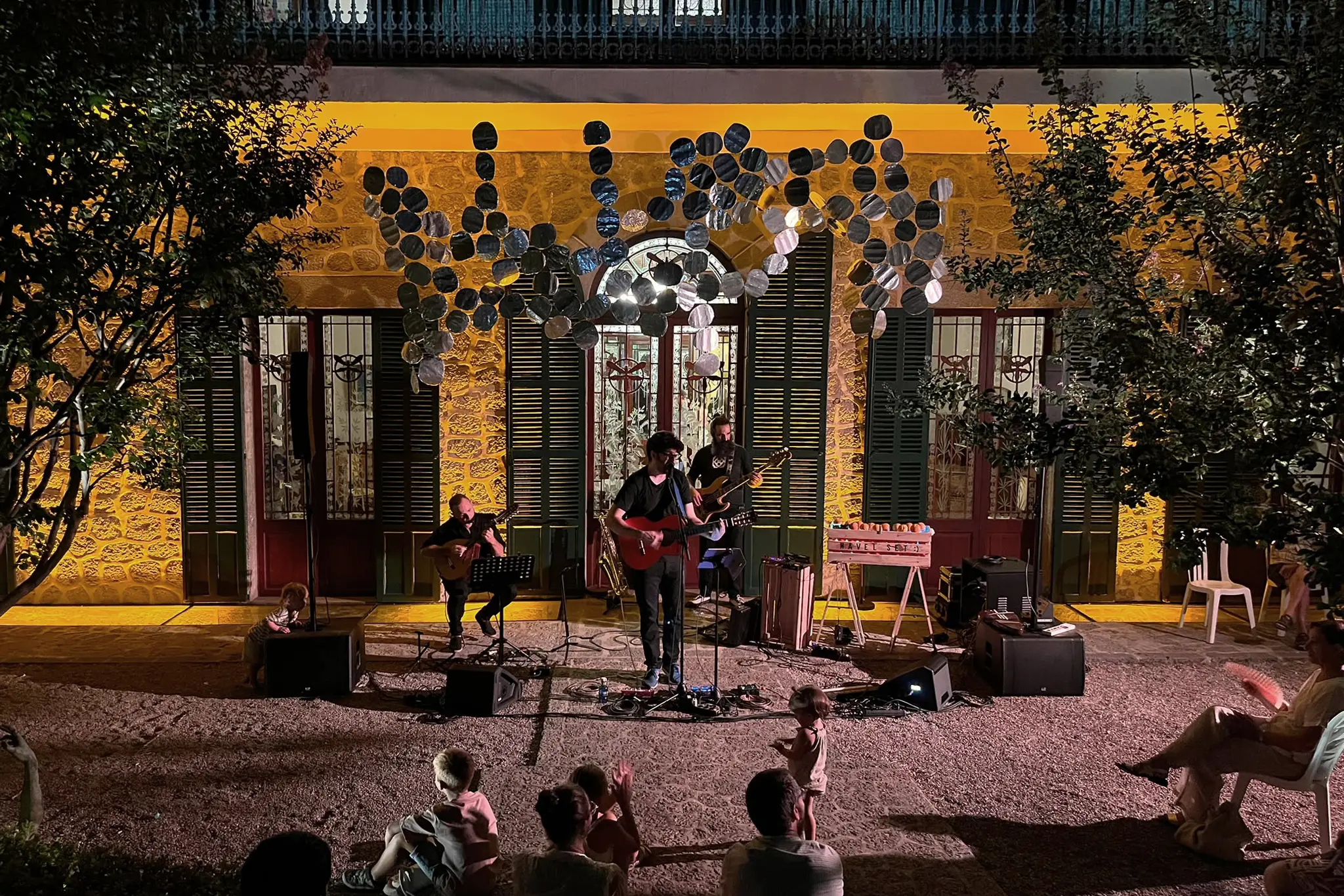
On Saturday 15 August, nobody ran through Can Prunera. Almost nobody. At seven o’clock we threw the doors wide open and, just outside, suspended above Carrer de sa Lluna, presented a new work: Peça a peça. An enormous mobile created during the summer workshops, built from pieces designed by the children, families, neighbours and strangers who, over the past few months, had stopped for a while at Can Prunera. Beneath it, we left boxes brimming with coloured chalk. We gave very few instructions: look up and respond, this time on the ground, to the shapes the wind was moving above our heads. A few hours later, the boundaries of the great urban mural were difficult to trace. It had long since spilled beyond the rectangle marked out in front of the entrance and was creeping up and down the street, between the feet of those arriving for Can Prunera’s Nit de l’Art.
That night, the house also lost something of its usual outline and rhythm. Thousands of people crossed those open doors, wandered in and moved through its corridors and rooms without there being any single proper way of inhabiting them. Some explored the rooms of the house, others admired the secrets of the collection; some found themselves dragged upstairs by their expert children to discover the Campo de Juego, some bumped into old acquaintances behind the stained-glass windows, while others crossed the house without stopping on their way to the garden. In the garden was L’espassio: there, the peculiar cosmos of Pere Andreo and his Navel Set filled the air. Together with Jeroni Rullan, Josep Alorda and Pere Moana, they carried us to Cúber; from there we climbed Puig Major and I swear we saw UFOs hovering above their heads. We chased llampugas too, and raised our glasses at the Menfis to the loves that the past had forbidden until our bilirubin went through the roof. Night fell, and Óscar González flooded the façade with lights and lines that escaped every gaze attempting to capture them. The house had opened its doors hours before; now it offered us its edges, its shadows, its very skin.
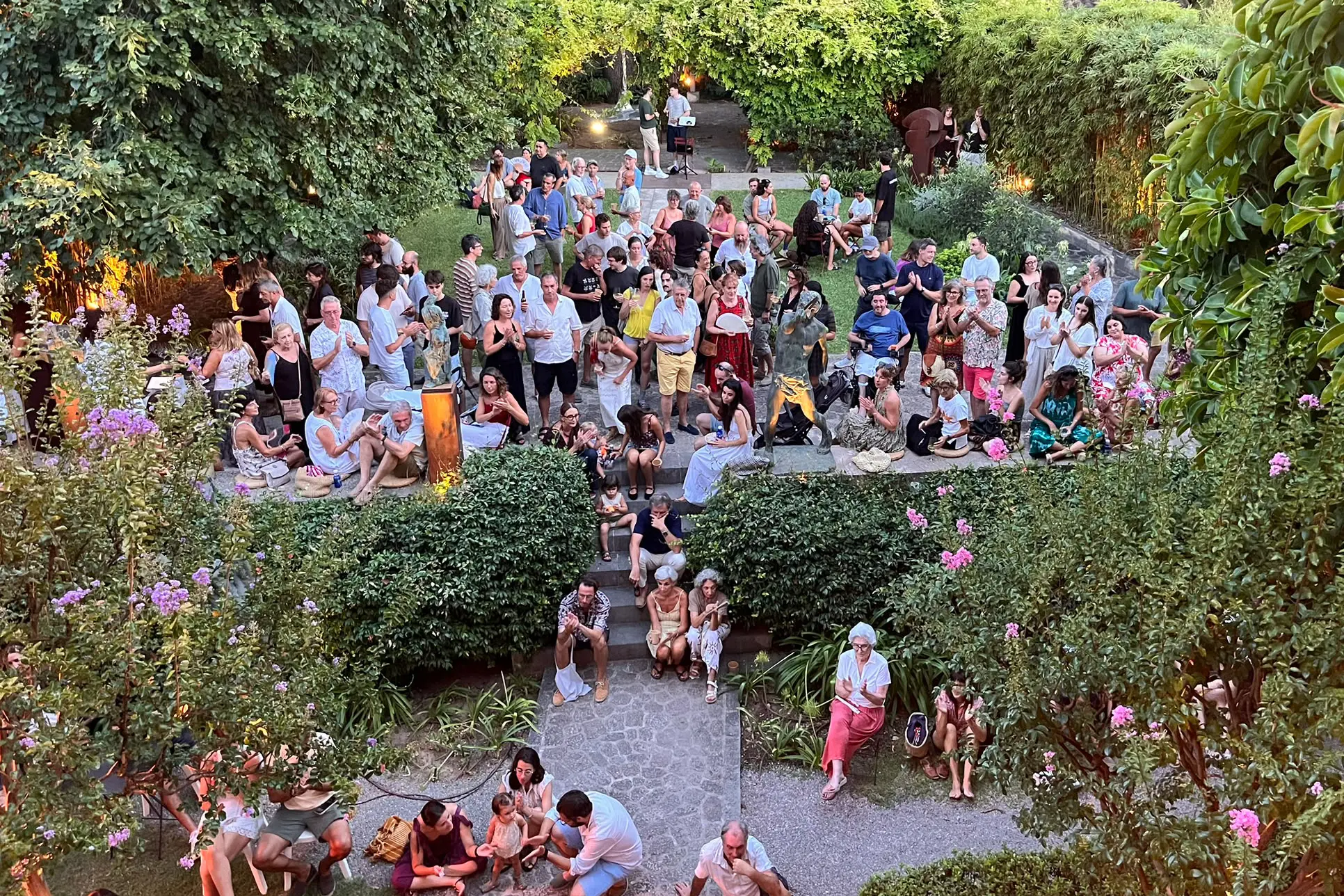
At Can Prunera’s Nit de l’Art, we organised, quite simply, a little disorder. We wandered without direction, drew on the ground, looked up at the sky, listened to music, talked endlessly, drank a little and toasted a lot. Odile, Franz and Arthur needed just nine minutes and forty-three seconds to disrupt the Louvre’s solemn choreography. Sixty years later, that unlikely race continues to fascinate us because it reminds us that every museum contains, alongside its images, a certain idea of how we ought to move among them and within the walls that shelter them. Perhaps opening the doors also means deliberately disturbing that choreography: allowing other bodies, other rhythms and other ways of being to find their place; allowing the distance between street and gallery to become uncertain, and something of what happens inside to escape outside; allowing what was meant to remain still, unexpectedly, to move—to run.
On Saturday 15 August, as the midnight bells echoed through the Sóller valley, Can Prunera had closed its doors, while hundreds of small pieces remained suspended outside the museum, moving in the wind.
What for?
There they were.
The question could wait until tomorrow.